

Blockchain and food traceability
According to the World Health Organization (WHO), contaminated food makes one in ten people ill and causes around 420,000 deaths every year.
Several of the problems facing the food industry, including cross-contamination, food fraud, the transmission of diseases and the high cost of product recalls, are made worse by a lack of information about the stages food passes through before reaching consumers. Proper food traceability should track a product through every stage of its journey, from production and processing to distribution. The quality of the information recorded is crucial to ensuring food safety.
However, because of the complexity of the food sector, its different processes and regulatory requirements and the large number of intermediaries involved —farmers, distributors, processors and logistics professionals, among others—, it is often extremely difficult to obtain a complete and consistent view of the entire supply chain.
Consequently, although the system generally works correctly, information is often incomplete and comes from a variety of sources and in different formats.
This is where blockchain emerges as a solution to these problems. It is a collaborative technology platform in which each participant in the food chain enters data once, with no possibility of subsequently changing or manipulating it. Blockchain combines the integrity and confidentiality of information with transparency.
This offers enormous advantages to every participant in the supply chain.
For food producers, any attempt to tamper with a food product as it moves through the supply chain can be identified and prevented immediately, before the product reaches the retailer.
For retailers, if a potentially dangerous food product reaches store shelves, shops can identify and withdraw only the suspect items instead of carrying out a blanket recall of the entire product line.
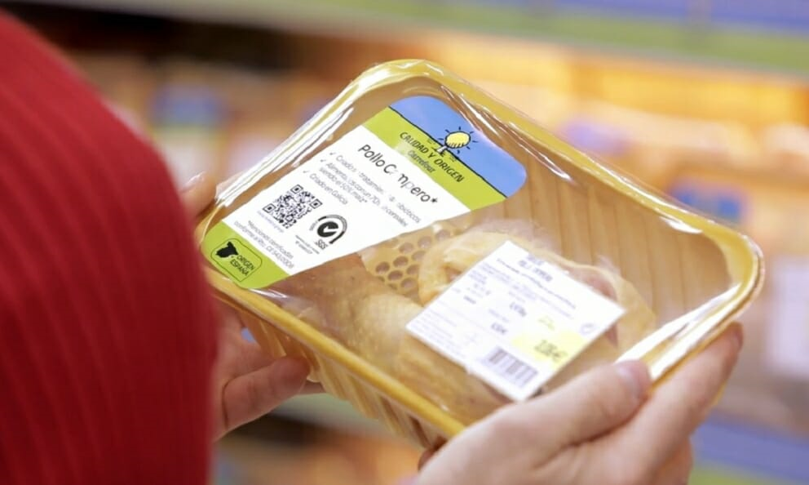
For consumers, blockchain provides the transparency needed to ensure that the food they eat is exactly what the label says it is. Using a simple QR code and a smartphone, customers can scan a package at the point of sale and receive a complete history of the product’s journey from farm to fork.
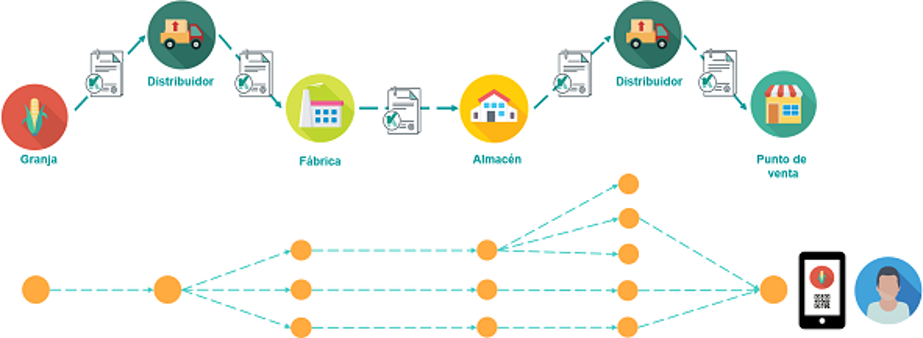
At present, when contaminated food is detected, it takes around two weeks to obtain all the information needed to isolate the batch and determine its exact location. With blockchain, all the information about a product can be retrieved in three seconds, while its location can be identified extremely quickly and precisely.
Cutting-edge technology with strong development momentum
Major players
Several companies have become heavily involved in developing these new technologies. They include Walmart in the United States and, in Europe, the Carrefour group through its “Act For Food” initiative and in partnership with IBM Food Trust: since 2018 for Coren poultry in Spain and, since 2019, with the Nestlé Group for its Mousline product.
The blockchain era is a development that deserves to be followed closely.